
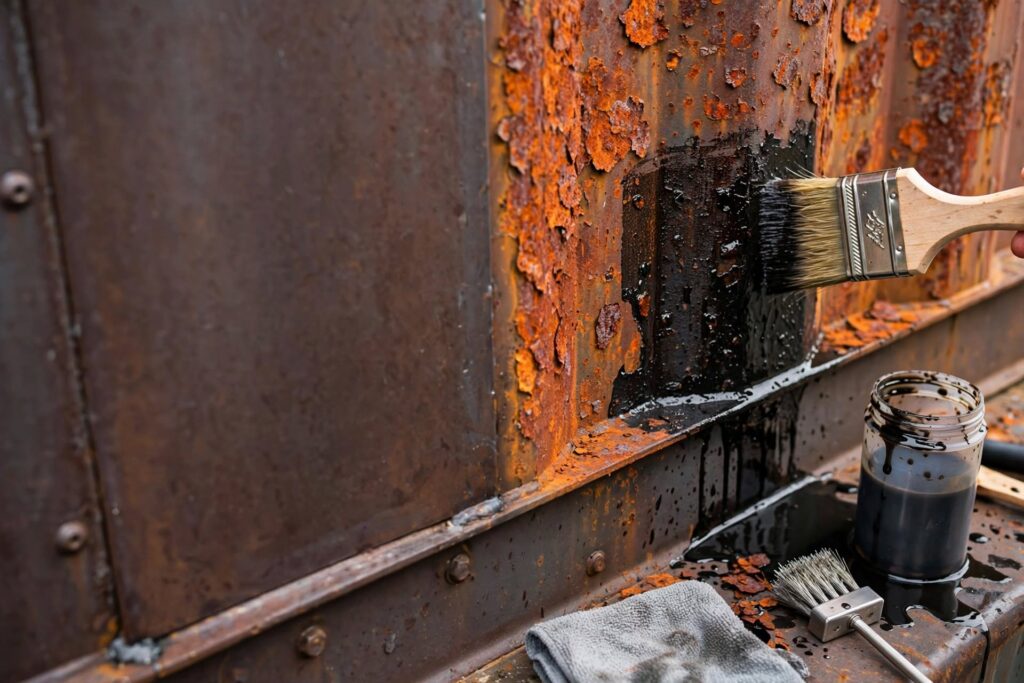
Corten Steel Container Rust: Prevention Tips
Shipping containers are made from Corten steel — also called weathering steel. It’s designed to rust in a controlled way. A thin layer of surface rust actually protects the steel underneath.
The problem starts when rust stops being that protective layer and becomes corrosive rust that eats through the metal. The difference is all about water, time, and maintenance.
Here is how to prevent it.
1. Understand How Corten Steel Works
Corten steel forms a stable, rust-colored patina when exposed to alternating wet and dry cycles. That patina seals the surface.
It fails when:
- Water stays on the steel constantly
- Salt or chemicals stay on the surface
- The steel can’t dry out between wet cycles
If you see flaking, bubbling, or holes you can poke through — that’s not Corten patina. That’s active corrosion.
2. The 5 Places Containers Rust First
Check these first, always:
1. The Roof
Number one failure point. Water pools in dents. Dust holds moisture. The roof is only 2mm thick — thinner than the walls. A small pool that never dries will rust through in 12-18 months.
2. Door Seals and Bottom Rail
Dirt and debris collect in the bottom door seal channel. It holds water against the steel and rots the bottom rail and door frame.
3. Underside and Cross Members
Ground moisture, grass, and poor ventilation under the container keep the bottom wet permanently. The cross members underneath rust before you see it from inside.
4. Inside Floor Edges
Water that gets inside (from open doors or condensation) runs to the edges where the plywood floor meets the steel. It gets trapped and rusts from the inside out.
5. Welds and Patches
Any previous repair weld is a weak point. Different metals and heat affect the Corten protection.
3. Prevention Tips That Actually Work
A. Keep It Dry on Top
- Clean the roof every 3-4 months. Sweep off leaves, dust, and dirt. That dust acts like a sponge.
- Ensure water runs off. Your container should have a very slight tilt — 1 to 2 degrees — so water doesn’t pool. If your roof has dents where water pools, consider a simple roof coating or a sacrificial roof panel on top.
- Don’t let things sit on the roof. Wood, boxes, or tarps trap moisture underneath.
B. Keep Air Moving Underneath
- Never place a container directly on bare ground or grass. Always place it on concrete blocks, railroad sleepers, or steel feet — at least 150mm off the ground.
- You need 6 support points: 4 corners + 2 in the middle to prevent sagging and to allow airflow.
- This airflow prevents condensation underneath and stops the bottom from sitting in damp soil.
C. Control Condensation Inside
This is the hidden killer. A steel box sweats.
- Ventilation is mandatory: Install at least 2 whirlybird turbines or louver vents — one high, one low — for cross ventilation. This reduces internal sweating by 70%.
- Insulate properly: If you use it as an office, workshop, or store moisture-sensitive goods, you must insulate with a vapor barrier. Bare steel + temperature change = dripping water inside.
- Don’t dry wet items inside without ventilation.
- Use moisture absorbers or a small dehumidifier for long-term storage.
D. Clean and Treat Surface Rust Early
- Wash the container with clean water twice a year to remove salt, dust, and industrial fallout.
- If you see bubbling paint or orange flaking rust:
- Wire brush down to clean metal
- Apply rust converter / rust inhibitor
- Prime with zinc-rich primer
- Topcoat with marine-grade enamel
Don’t just paint over rust — it will continue spreading underneath.
E. Protect the Doors
- Clean the door seal channels and bottom rail monthly. Remove mud and debris.
- Grease the door hinges, locking bars, and keepers every 3 months with heavy-duty grease.
- Keep door gaskets clean and flexible — apply silicone spray to prevent cracking.
F. Floor Care
- Don’t let water sit on the plywood floor.
- Re-seal the plywood floor with wood preservative every 12-18 months if you wash it often.
- Fix any interior roof leaks immediately — water that gets in goes straight to the floor edges.
4. What to Do for Different Uses
For Storage Only:
Clean roof, ensure 150mm ground clearance, install 2 vents, grease doors, wash twice a year. That’s enough for 20+ years.
For Office / Conversion / Shop:
You must add: proper insulation with vapor barrier, sloped roof cover or membrane, full repaint with rust-inhibiting system, and sealed gutters to move water away from base.
For Long-Term Investment:
Consider a full repaint on delivery with a 2-coat system: zinc primer + topcoat. It adds cost upfront but doubles the maintenance interval.
5. Myths vs. Facts
Myth: “Corten steel never rusts through.”
Fact: It resists rust far better than regular steel, but it will rust through if water is trapped permanently.
Myth: “You should not paint a Corten container.”
Fact: Painting is the best protection. The original factory paint is your first defense. Repainting maintains it.
Myth: “Surface rust is bad and must be removed immediately.”
Fact: Light, even, brown surface rust that is flat and hard is normal protective patina. Only remove flaking, bubbling, or thick scaling rust.
Bottom Line
Corten steel gives you a huge advantage, but it is not maintenance-free. Rust prevention comes down to 3 simple rules:
- Keep water from pooling — on roof, in door rails, and underneath.
- Keep air moving — underneath and inside.
- Treat small rust early — before it becomes a hole.
A container that is kept dry on top, lifted off the ground, and ventilated will last decades. A container sitting in mud with leaves on the roof will leak in a year, no matter what grade it is.
Pro Tip: When you buy a container, ask the supplier to clean the roof, grease all moving parts, and apply cold galvanizing to any scratched areas before delivery. It takes them 10 minutes and saves you hours later.