
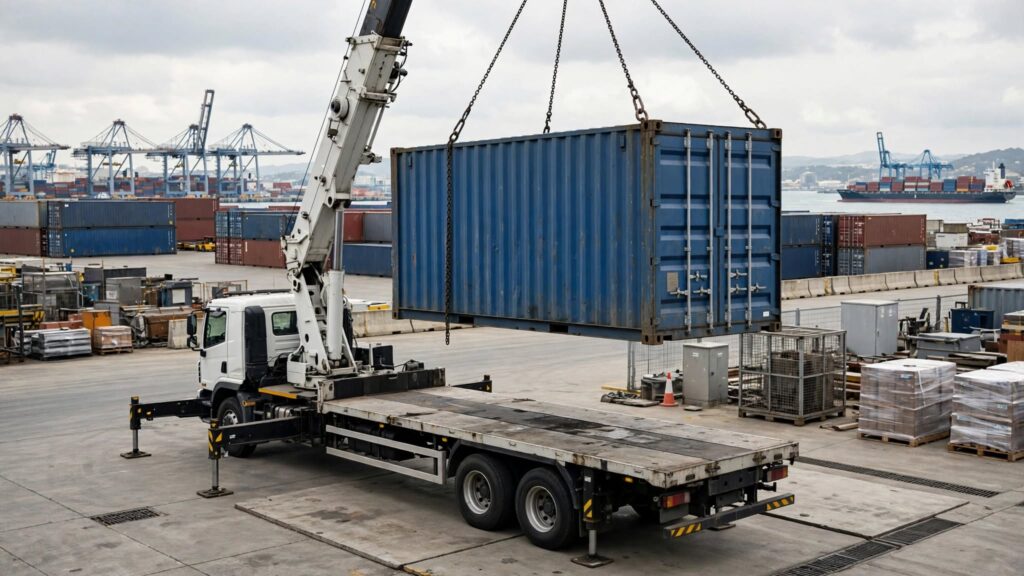
Container Delivery Worldwide
Buying a container is the easy part. Getting a 2.5-ton steel box from a depot to your exact location is where planning matters. Whether you’re ordering a 20ft storage container, a 40ft high-cube, or a fully converted office, worldwide delivery follows the same 4 steps.
1. How Worldwide Container Delivery Works
Step 1: Depot to Port / Truck
Your container starts at a depot or fabrication yard. For domestic delivery, it goes straight on a truck. For international delivery, it moves to the nearest port.
Step 2: Transport Method
- Truck (Most Common): For deliveries within the same continent. Uses a flatbed, tilt-bed, or crane truck.
- Sea Freight: For overseas orders. Container ships move it as cargo. You choose FOB (you arrange shipping) or CIF (supplier arranges shipping to your port).
- Rail + Truck: Used for inland locations far from ports. Rail moves it most of the way, truck does last-mile.
Step 3: Last-Mile Delivery
This is the critical part. A standard truck needs:
- 3.5m width clearance
- 4.5m height clearance (no low branches, cables, or bridges)
- 20m straight approach for a 40ft truck
- Firm, level ground for offloading
Step 4: Offloading
- Tilt-Bed Truck: Bed tilts and container slides off. Needs 2x container length of clear space behind truck. No extra equipment needed. Best for open areas.
- Crane Truck / Hiab: Crane lifts container off and places it precisely. Needs overhead clearance but minimal ground space. Best for tight sites or exact placement.
- Customer Forklift / Crane: You provide lifting equipment. Supplier drops at nearest accessible point.
2. What Affects Delivery Cost
Delivery is quoted separately because 5 factors change the price:
1. Distance from Depot
Longer distance = more fuel, driver time, permits. This is the biggest factor.
2. Container Size
- 20ft: Can go on smaller trucks, easier to place, cheaper to move
- 40ft: Requires larger truck, more permits, needs more space to offload
3. Truck Type
- Flatbed: Cheapest, but you need a crane/forklift on site
- Tilt-bed: Mid-range, self-offloading
- Crane truck: Most expensive, but places exactly where you want it
4. Site Access
Tight roads, soft ground, steep slopes, low power lines, gates under 3.5m wide — all require special planning and can increase cost. Always send photos/video of access route to your supplier.
5. Urgency & Return Trip
Standard delivery is cheaper. Same-day or next-day dispatch costs more. If truck returns empty, you pay both ways. Some suppliers offer back-load discounts if they have a truck returning in your direction.
3. How to Prepare Your Site Before Delivery
Do this before the truck arrives — it prevents 90% of delivery failures:
Checklist:
- Level the ground: Use concrete blocks, sleepers, or pavers. An unlevel container twists and doors won’t close properly after a few months.
- Measure access: Gate width, overhead cables, low branches, tight corners. Send measurements to driver.
- Clear the drop zone: Remove vehicles, debris, and ensure 20-25m of straight clear space for tilt-bed offload.
- Check ground strength: Soft, wet ground will cause truck to get stuck or container to sink. Gravel or hardstanding is ideal.
- Mark exact placement: Use spray paint to show where you want corners.
- Confirm with neighbors: If truck needs to block road temporarily, inform them.
- Be on site or have someone present: Driver needs permission to place and signature for delivery.
Pro Tip: Take 6 photos and send to your supplier: front gate from road, driveway/road to site, overhead view for cables, the exact drop spot, any tight turns, and ground condition.
4. International Delivery — What Buyers Should Know
If your container is coming from overseas:
- Port Fees: Destination port charges handling, customs, and storage fees. These are separate from transport.
- Customs Clearance: You need import documents, commercial invoice, and packing list. Some converted containers require additional permits as they are considered structures.
- CSC Plate: Make sure container has valid CSC safety approval plate — required for international shipping.
- Insurance: Ask for transit insurance for sea freight. It’s inexpensive and covers damage/loss at sea.
- Lead Time: Sea freight adds 2-6 weeks depending on route, plus customs clearance.
Always ask if quote is Ex-Depot, FOB, or DDP (Delivered Duty Paid). DDP is most transparent — all costs included to your site.
5. How to Avoid Common Delivery Problems
Problem: Truck can’t access site.
Solution: Send video of entire route beforehand. Request site inspection for complex sites.
Problem: Container placed in wrong spot.
Solution: Be on site and mark placement with paint. Crane trucks can adjust by centimeters.
Problem: Container sinks or doors won’t close after a month.
Solution: Level ground properly with 6 support points (4 corners + 2 middle). Don’t place directly on bare soil.
Problem: Unexpected extra fees at port.
Solution: Get written confirmation of what is included — transport, customs, port handling, offloading.
6. Quick Quote Checklist
To get an accurate delivery quote fast, provide your supplier with:
- Exact delivery address + pin location
- Container size and type (20ft standard, 40ft high-cube, office conversion, etc.)
- Photos/video of access route and drop spot
- Ground type (concrete, gravel, dirt, grass)
- Do you have forklift/crane on site or need truck with crane?
- Desired delivery date
- Contact person on site with phone number
Bottom Line
Worldwide container delivery is routine — thousands are moved daily — but it requires planning. The cheapest delivery is not the one with the lowest truck price, it’s the one that arrives first time, in the right spot, without damage.
Choose a supplier who asks about site access before quoting. If they quote delivery without asking for photos or access details, expect surprises on delivery day.
Pro Tip: If you are ordering a converted office or specialty container, have it delivered with the doors facing away from prevailing wind and with a slight tilt (1-2 degrees) toward the doors for water runoff — it extends the life of door seals and prevents water pooling on the roof.