
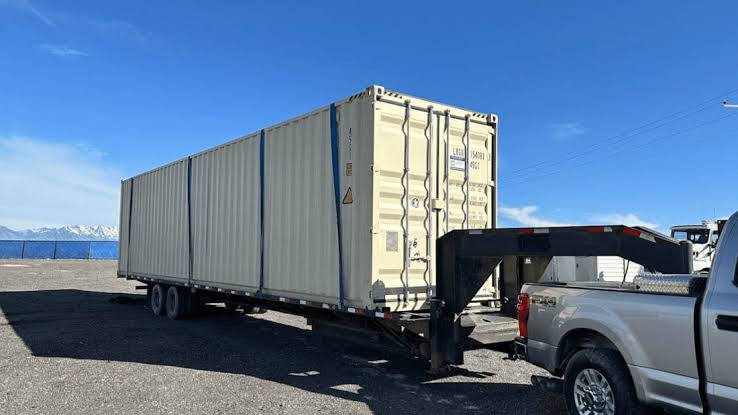
Rent vs Buy a Shipping Container
When a US business or individual needs mobile storage, job site security, or a base for a custom modification, the immediate question is: Is it better to rent or buy a shipping container?
In the USA shipping container market, the financial cross-over point typically sits at 18 to 24 months. If you need a container for less than a year and a half, renting is almost always more cost-effective; if you need it longer, purchasing becomes the smarter long-term investment.
The guide below details the upfront costs, ongoing logistics, and a concrete decision framework to determine whether renting or buying fits your budget and operational goals.
Upfront Financial Comparison
The initial cash outlay is the most stark difference between these two strategies.
| Cost Component | Renting a Container | Buying a Container |
|---|---|---|
| Upfront Cost | $150 – $500 (First month rent + delivery) | $1,500 – $6,000+ (Full purchase price) |
| Monthly Rate | $75 – $250 / month | $0 |
| Delivery Fee | Charged on drop-off and pick-up | Charged on drop-off only |
| Condition Options | Usually standard “Wind & Watertight” (WWT) | Cargo Worthy (CWI), WWT, or “One-Trip” (New) |
The Economics of Renting a Container
Renting treats storage as an operational expense (OpEx), keeping your liquid capital free for other business investments.
1. Low Barrier to Entry
Baseline rental rates for standard sizes generally fall into these brackets:
- 20-foot Standard Container: Approximately $75 to $150 per month.
- 40-foot Standard Container: Approximately $120 to $250 per month.
Specialty units, like open-tops, double-door configurations, or refrigerated “reefers,” command higher premiums.
2. Double Delivery Penalties
When renting, you must account for two-way logistics. You will pay a delivery fee to bring the box to your site, and a subsequent pick-up fee when the rental contract expires. Depending on your proximity to a major intermodal depot (like Houston, Chicago, or Newark), delivery can cost anywhere from $150 to $500+ each way.
3. Zero Maintenance Liabilities
The core advantage of renting from established US providers like WillScot Mobile Mini or Conexwest is structural maintenance. If a door gasket fails, a roof seam rusts through, or the locking rods warp, the rental agency is responsible for repairing or swapping out the unit at no cost to you.
The Economics of Buying a Container
Buying transforms the container into a capital expense (CapEx) and an asset that can be modified, moved indefinitely, or eventually resold.
1. Tiered Purchase Pricing
The price of a purchased container in the USA depends heavily on its grading:
- Used (Wind & Watertight): Around $1,500 to $3,000. These have visible dents and surface rust but are structurally sound against rain and pests.
- One-Trip (Like New): Around $3,500 to $6,000+. Manufactured overseas, loaded with cargo exactly once to cover transit costs to the US, and sold in pristine condition.
2. One-Way Delivery and Lifetime Utility
Purchasing means you only pay for delivery once. Furthermore, you face zero time constraints. If a construction project delays by six months, your storage costs do not climb by a single dollar.
3. Permanent Modifications Allowed
You cannot alter a rented container. Buying grants you total creative and structural freedom to add spray-foam insulation, bolt down heavy-duty shelving, cut out windows, or install HVAC systems and electrical panels for mobile office conversions.
Hidden Factors: Depreciation and Regulations
The US Resold Asset Market
Shipping containers retain secondary market value incredibly well. A well-maintained, used 20-foot container bought today for $2,500 can frequently be resold on platforms like Craigslist or local heavy equipment networks years later for $1,200 to $1,800. This residual value lowers your total cost of ownership (TCO).
Municipal Zoning and Permitting Laws
Local regulations in the United States vary wildly. Many suburban municipalities or strict HOAs prohibit permanent shipping containers on residential or commercial plots, but will tolerate a temporary rental container for 30–90 days with a valid building permit. If you buy a container but are later forced by local code enforcement to remove it, you face steep emergency transport costs.
Decision Matrix: Rent vs. Buy
To quickly determine the right path, evaluate your timeline and project scope against these criteria:
- Rent If: Your project lasts less than 18 months, you have no interest in permanent structural modifications, you lack the capital for an outright purchase, or local zoning laws only permit temporary structures.
- Buy If: Your storage needs are permanent or open-ended, you require custom modifications (shelving, climate control, custom paint), you want to build equity in a resellable asset, or you plan to move the container to multiple properties over several years.