
How to Inspect a Used Shipping Container
A used container can save you thousands, but only if it’s truly wind and watertight. Most damage is hidden in 5 places that sellers hope you won’t check. Use this 10-minute inspection routine on the exact unit you’re buying — not a stock photo.
1. The Outside Walk-Around (2 Minutes)
Walk around the container slowly. You’re looking for structure, not paint.
Roof: This is the #1 failure point. Stand back and look for dents where water pools. Even a small low spot will hold water, rust through, and leak in 6 months. Surface rust is normal. Flaking rust you can push through with your finger is not.
Side Panels & Corners: Dents are cosmetic unless they are deep and creased. Focus on the vertical corner posts and horizontal rails — if those are bent, the container is twisted and doors will never seal properly.
Corner Castings: The 8 corner blocks must be solid with no weld cracks. This is how it gets lifted.
CSC Plate: Every ISO container has a metal safety plate on the left door. It shows manufacturer, date, and max weight. If it’s missing or painted over, be cautious — it may not be ISO compliant.
2. The Daylight Test (1 Minute)
This is the most important test for any used container.
- Open both doors
- Step inside and have someone close the doors behind you
- Wait 30 seconds for your eyes to adjust
- Look at roof, walls, and door seals
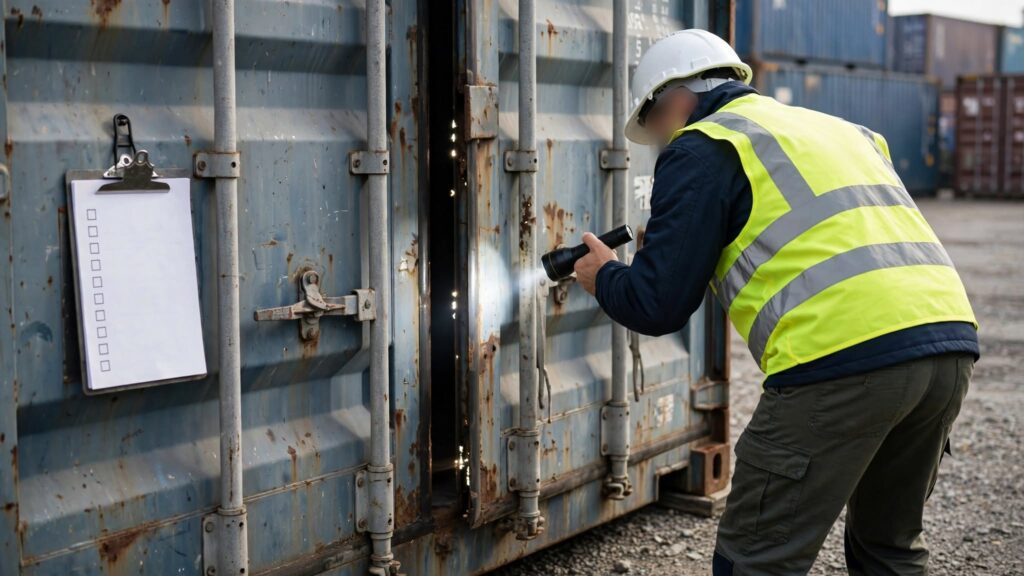
If you see any pinpoints of daylight, you have holes. For storage, that’s a fail. Mark them with chalk. One or two tiny pinholes can be welded, but if you see many, walk away.
3. Door Operation (1 Minute)
Container doors are heavy and should not need 2 people to open.
- Both lock bars should rotate fully with moderate force
- Handles should lock into the keepers without hammering
- Door gaskets (the rubber seals around the doors) should be intact, flexible, not cracked or missing chunks
- Doors should close and seal flush — no bowing out at the top or bottom
- Open and close each door individually. If one door drags on the floor, the container is racked or the floor is failing
Pro Tip: If the seller uses a forklift to force the doors shut, the container is twisted.
4. Floor Inspection (2 Minutes)
The floor is 28mm marine plywood, rated to carry 25+ tons, but it rots from underneath.
- Walk the entire floor — feel for soft spots, delamination, or bounce
- Look for black stains, oil contamination, or strong chemical smells — this could indicate hazardous cargo spill
- Check where the floor meets the steel cross members underneath — that’s where rot starts
- Lift the corner of the floor if possible and look at the steel cross members for heavy rust
- Smell: A musty, damp smell means it has leaked before
A good floor is dry, solid, and has no soft sections.
5. Inside Walls and Ceiling (2 Minutes)
- Run your hand along the interior walls — you will feel repairs and patches
- Look for welded patches — one or two small professional patches are okay, many patches mean heavy damage history
- Check for excessive surface rust on the interior — light surface rust is normal, heavy scaling rust means condensation problems
- Look at the ceiling for dents pushed down — indicates something heavy was dropped on the roof
6. Underneath (1 Minute)
If you can, crouch and look under the container with a flashlight:
- Cross members should be straight, not bent or heavily rusted
- No holes in the underside
- Check that the container is sitting level — if it’s twisted, doors won’t seal long-term
7. Documentation Check (1 Minute)
Before paying, ask for:
- Photos of the exact container — front, both sides, back, roof, interior, floor, CSC plate, door seals
- Grade confirmation in writing — Wind & Watertight, Cargo Worthy, IICL-5, or One-Trip
- Guarantee — Will the supplier guarantee no leaks for 12 months? A reputable supplier will
- Lock Box: Is a shrouded lock box included? If not, budget for one
Red Flags — Walk Away If You See:
- Heavy daylight through roof or walls
- Doors that need excessive force or don’t seal
- Soft or rotten floor sections
- Heavy structural rust you can poke through
- Bent corner posts or top rail
- Seller refuses to show you the exact unit or only shows stock photos
- No CSC plate
Green Flags — Good Signs:
- Doors open smoothly with one hand
- No daylight inside
- Solid, dry floor
- Light surface rust only, not flaking
- Intact door gaskets
- Clear, readable CSC plate
- Supplier offers photos of exact unit before delivery
Bottom Line
A 10-minute inspection can save you from a leaking, rusted box that will cost more to fix than a good one costs to buy.
Never buy a used container from a single exterior photo. Always do the daylight test, check the floor, and operate the doors yourself.
Pro Tip: If you can’t inspect in person, ask the supplier for a 60-second video: doors opening/closing, walk inside with doors closed to show no light, and a full walk of the floor. If they won’t provide it, find another supplier.