
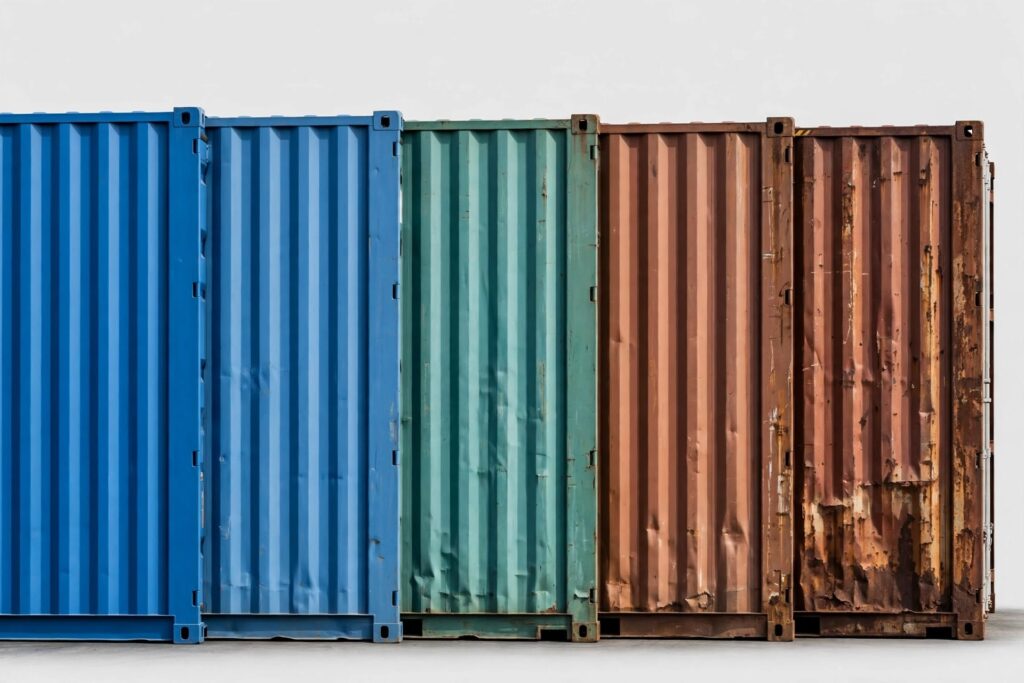
ISO Container Condition Grades Explained
A practical guide to container grades for businesses and buyers
All used shipping containers look similar from 10 feet away. The condition grade is what tells you what you’re actually buying — how much life it has left, what it can be used for, and what you should pay. Use this guide to decode the grades.
1. The ISO Grading System at a Glance
There is no single global law for grading, but the industry uses these 5 standard grades everywhere:
Grade | Also Called | Age | What It Means |
|---|---|---|---|
One-Trip / New | Like-New, Single-Use | < 1 year | Shipped cargo once, then sold. Minimal wear. |
IICL-5 | Premium Used | 5-8 years | Meets strict IICL repair standard. Best used grade. |
Cargo Worthy (CW) | Certified for Shipping | 8-15 years | Passes inspection, safe to ship cargo internationally. |
Wind & Watertight (WWT) | Storage Grade | 10-20 years | No leaks, no holes, doors close. Not certified for shipping. |
As-Is / Damaged | Needs Repair | Any | Sold with visible damage, rust, or faulty doors. Cheapest. |
2. Detailed Breakdown
1. One-Trip / New Condition
- Built in the last 12 months, loaded once from factory to destination.
- May have small dents, light surface rust on hinges, and shipping stickers.
- Inside is spotless, floor is perfect, door seals are new.
- Best for: Conversions into offices, homes, shops, kiosks — anything where appearance matters. Also best for long-term storage.
- Cost: Highest, but you get 25+ years of life.
2. IICL-5 Grade
- IICL is the Institute of International Container Lessors — their repair standard is the strictest in the world.
- Containers must pass a 200+ point check. Any dent over a certain size, any rust patch, any door issue must be repaired to near-factory spec.
- Best for: Buyers who want a used price with near-new reliability. Great for export businesses.
- How to verify: Ask for IICL-5 certificate.
3. Cargo Worthy (CW)
- Inspected by a licensed surveyor and certified to still ship cargo.
- Must be structurally sound, doors must seal, floors must hold weight, no daylight visible when closed.
- Will have dents, surface rust, patches, and faded paint — that’s normal.
- Best for: International shipping, heavy storage, businesses that need certification for insurance or port use.
- How to verify: Ask for valid CW certificate, usually valid for 12 months.
4. Wind & Watertight (WWT)
- The workhorse grade. This is what 70% of buyers choose for storage.
- Guarantee: No holes, no leaks, doors open and close, floors are solid.
- Not certified for shipping cargo overseas.
- Will show age — dents, rust, repairs, older paint.
- Best for: Ground-level storage, workshops, equipment storage, budget conversions where you will repaint or clad anyway.
- What to check: Open the doors on a sunny day and close yourself inside. If you see daylight, it’s not truly WWT.
5. As-Is / Damaged
- Sold exactly as found. May have holes, heavy rust, broken door handles, damaged floors, or off-track doors.
- Cheapest, but you pay for repairs.
- Best for: Scrap projects, spare parts, or buyers with welding skills who want to do the restoration themselves.
- Avoid this grade if you need immediate storage.
3. Which Grade Should You Buy?
Ask yourself 3 questions:
- Will it ship internationally? → You need Cargo Worthy or better.
- Will customers see it? (Office, cafe, home, retail) → Choose One-Trip or IICL-5.
- Is it just for secure storage on your property? → WWT gives you the best value.
Quick Decision Guide:
- Maximum lifespan + best appearance: One-Trip
- Best quality used container: IICL-5
- Need to export or need a surveyor certificate: Cargo Worthy
- Best value for storage: Wind & Watertight
- Cheapest + DIY repair: As-Is
4. Red Flags When Buying Any Grade
No matter the grade, reject a container if:
- You can see daylight through roof or panels when doors are closed
- Floor is soft, delaminated, or smells strongly of chemicals
- Door locking bars are bent or handles won’t lock with moderate force
- Heavy flaking rust that you can poke a hole through
- No CSC plate (the metal safety plate on the door) — this indicates it may not be ISO compliant
Bottom Line
Don’t buy on price alone — buy on grade for your use case. For most businesses, a certified WWT container is the sweet spot for storage, while a One-Trip container is worth the extra cost for any conversion where image and longevity matter.
Pro Tip: Always ask for dated photos of the exact container — not stock photos — showing the interior, doors open and closed, floor, roof, and CSC plate. A trustworthy supplier will provide them before payment.